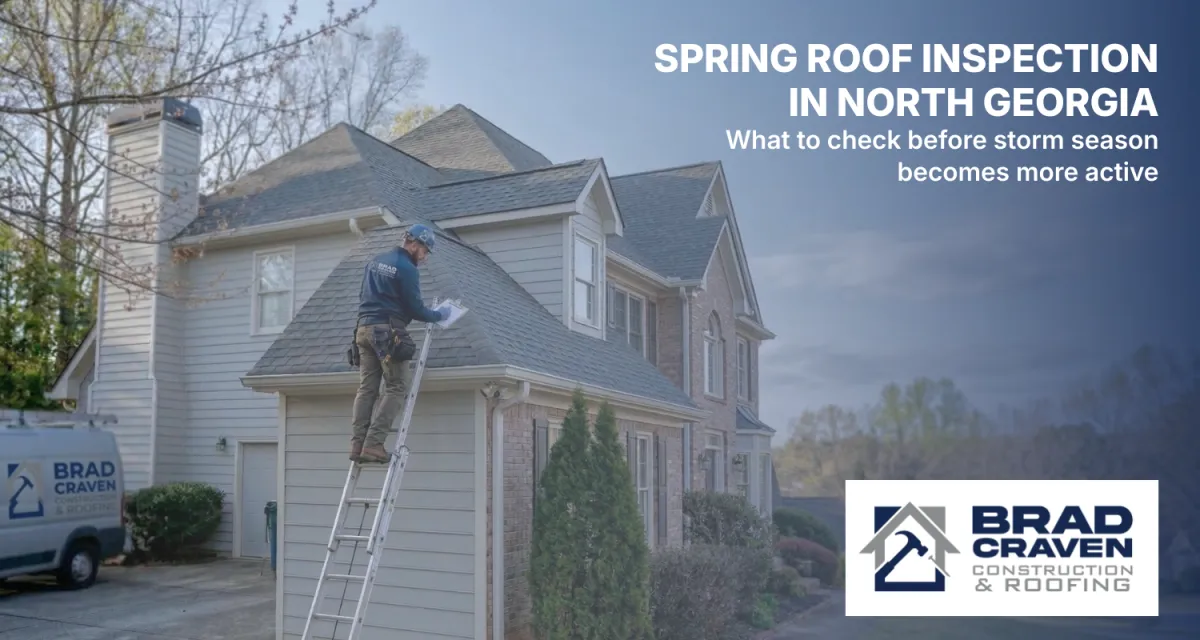
Spring Roof Inspection in North Georgia | March 2026
As March 2026 gets underway, homeowners across North Georgia are moving into one of the most important times of year for roof maintenance.
Winter wear has already had time to affect shingles, flashing, gutters, and roof drainage. At the same time, spring in Georgia often brings stronger winds, heavy rain, hail, and a higher risk of storm-related roof damage. That makes March a smart time to inspect your roof before small issues turn into leaks, interior damage, or more expensive repairs.
At Brad Craven Construction & Roofing, we help homeowners across North Georgia identify roofing problems early so they can make the right decision before the weather becomes more active.
Why March Is a Smart Time to Inspect Your Roof
March sits in the sweet spot between winter wear and the more active stretch of spring weather.
By this point in the year, your roof has already been exposed to temperature swings, moisture, wind, and debris. But you still have time to catch smaller issues before repeated spring storms place even more stress on weak areas.
That timing matters. A loose shingle, worn flashing detail, clogged gutter, or small leak may not seem urgent now, but those problems rarely stay small once heavy rain and stronger storms begin moving through.
What Winter and Early Spring May Have Done to Your Roof
Many homeowners do not realize their roof has a problem until they see a stain on a ceiling or wall.
But roof damage usually starts earlier than that. Late winter and early spring can leave behind issues such as:
lifted or loose shingles
cracked, curling, or aging shingle edges
granule loss on asphalt shingles
flashing wear around vents, chimneys, and roof penetrations
clogged gutters that push water back toward the roofline
moisture intrusion in attic areas
debris impact from branches or storm-blown limbs
These problems are not always obvious from the driveway, but they can become much more serious once regular spring rain arrives.
Signs You May Need Roof Repair This Spring
If you notice any of the following signs, it is a good idea to schedule a professional roof inspection.
1. Water stains on ceilings or walls
Brown spots, discoloration, bubbling paint, or musty smells may point to moisture getting in through the roof.
2. Missing, cracked, or curled shingles
Damaged shingles can expose the roof to water intrusion and make it easier for wind-driven rain to reach vulnerable areas.
3. Granules collecting in gutters
A sand-like buildup in gutters or near downspouts can be a sign that shingles are wearing down.
4. Sagging or uneven roof areas
A sagging section may indicate trapped moisture, deteriorated decking, or other structural concerns that should be checked quickly.
5. Overflowing or clogged gutters
Drainage issues can lead to water backing up near the roof edge, fascia, and soffits.
6. Damage after strong wind or hail
Even one round of rough weather can loosen shingles, shift flashing, or cause impact damage that is easy to miss from the ground.
Why Gutters Matter During a Spring Roof Inspection
A roof inspection should not stop at the shingles alone.
Your gutters and drainage system play a major role in protecting the roof, fascia, soffits, siding, and even the foundation. If gutters are clogged with leaves, debris, or shingle granules, water may overflow or back up where it should not.
Spring is a smart time to make sure:
gutters are clear and draining properly
downspouts are directing water away from the home
gutter fasteners are secure
water is not spilling behind the gutter line
fascia boards are not showing soft spots or visible staining
What looks like a small gutter problem can quickly become a roofing problem if it is ignored long enough.
Repair or Replacement: How Do You Know Which You Need?
This is one of the most common questions homeowners ask after a roof inspection.
In many cases, a repair may be enough if the issue is limited to one section and the rest of the roof is still in good condition. That could mean replacing damaged shingles, correcting flashing issues, sealing vulnerable areas, or improving drainage.
In other cases, a replacement may be the smarter long-term investment. That conversation usually becomes more important when the roof is older, deterioration is widespread, or previous repairs are no longer solving the underlying problem.
A quality inspection can help answer questions like:
Is the damage isolated or widespread?
Is the roof still structurally sound?
Will a repair realistically solve the issue?
How much useful life does the current roof appear to have left?
The goal is not to push you toward the biggest project. The goal is to understand the roof clearly so you can make a smart decision before the weather gets rougher.
Why Local Experience Matters in North Georgia
North Georgia homes deal with a mix of weather conditions throughout the year, including wind, heavy rain, hail potential, seasonal moisture, and storm activity.
That local reality matters when evaluating roof damage. A contractor familiar with North Georgia conditions is better equipped to spot common seasonal trouble areas, prioritize the right repairs, and recommend whether maintenance, repair, or replacement makes the most sense for the home.
That kind of practical local experience can make a real difference when protecting your property before storm season becomes more active.
The Value of a Spring Roof Inspection
A spring roof inspection is not just about finding major damage.
It is about getting clarity before a small issue becomes a more expensive one.
Scheduling an inspection in March can help you:
catch damage before spring storms make it worse
prevent small leaks from spreading into insulation, ceilings, or drywall
protect gutters, fascia, and roof drainage performance
extend the life of your current roof
plan ahead if repair or replacement is needed
gain peace of mind before the heavier storm season arrives
For many homeowners, the biggest benefit is simple: fewer surprises.
Frequently Asked Questions
How often should a roof be inspected?
A roof should be checked regularly, especially after strong storms or visible weather stress. Spring is one of the best times because it helps homeowners identify winter wear before heavier seasonal rain creates bigger problems.
Can I inspect my roof myself?
You can do a basic visual check from the ground and inside the home, but it is best to avoid climbing onto the roof unless you have the right equipment and experience.
What if I only see one missing shingle?
Even one missing shingle can create an entry point for water, especially during spring rain. It is usually better to address a small issue early than wait for moisture to spread underneath the roofing system.
Is March better than waiting until summer?
In many cases, yes. March gives you a chance to find and fix smaller issues before hotter weather and stronger seasonal storms place more stress on the roof.
Schedule Your Roof Inspection With Brad Craven Construction & Roofing
If you live in Dallas, Acworth, Cartersville, Douglasville, Jasper, or elsewhere in North Georgia, March is a smart time to make sure your roof is ready for the season ahead.
Brad Craven Construction & Roofing helps homeowners with roof maintenance, roof repair, and roof replacement across North Georgia. If you want to catch roofing issues early and protect your home before spring weather becomes more active, now is a good time to request a quote.
